Introduction
India's private school EdTech market reached $7.5 billion in 2025 and is projected to hit $29-33 billion by 2030-2034, with K-12 learning accounting for 43% of the sector. That growth has pulled hundreds of private schools — especially in Tier 2 and Tier 3 cities — toward platforms like LEAD School for standardized curriculum delivery.
But standardization has a cost. Many schools that adopted LEAD-style platforms now find themselves locked into rigid bundles that don't adapt to how their students actually learn.
Private schools face a genuine tension: they need structured curriculum support and dependable teacher tools, but they also need flexibility, affordability, and personalization. Some schools report cost escalation year-on-year. Others struggle with AI features that look impressive in demos but fail to close learning gaps at the individual student level.
This article evaluates the top LEAD School alternatives available to private schools in India today, covering what each platform offers, how they differ, and what to consider before switching.
TL;DR
- LEAD School's rigid bundling, opaque costs, and limited AI personalisation are pushing private schools to find better alternatives
- Strong alternatives combine curriculum support, teacher empowerment, and student-level adaptive learning in one platform
- Platforms like Coschool deliver generative-AI-powered 1:1 learning without requiring schools to overhaul existing infrastructure
- Key criteria: curriculum fit, teacher usability, parent engagement, pricing transparency, and real-time analytics
- Choose a platform that grows with your school — not one that locks you into a fixed programme
Why Private Schools Are Looking Beyond LEAD School
LEAD School offers an integrated school programme (ISP) covering curriculum, teacher training, assessments, and branding. The platform raised $100 million at a $1.1 billion valuation in January 2022, serving over 2,000 schools and 800,000 students as of 2021. Its rapid adoption among budget and mid-tier private schools in Tier 2 and Tier 3 cities reflected a genuine need for structured, scalable academic delivery.
As schools mature in their EdTech adoption, several pain points have surfaced:
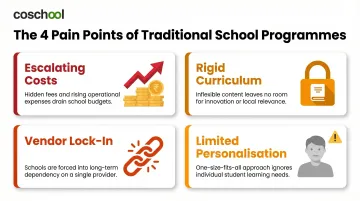
- Escalating costs: Annual fees grow with enrolment, and LEAD's bundled model makes it difficult to pay only for what a school actually needs.
- Rigid curriculum: LEAD's standardised programme doesn't flex easily to local board requirements, regional language needs, or schools running CBSE and state board streams simultaneously — a common scenario across Telangana.
- Vendor lock-in: Full ISP adoption ties schools to LEAD's content, assessments, and branding. Switching costs rise, and schools gradually cede control over their academic identity.
- Limited personalisation: Traditional ISPs digitise textbooks and centralise assessments, but don't adapt to individual student learning gaps in real time. Conversational AI tutors and actionable teacher insights are capabilities that static content libraries can't replicate.
The evidence for AI-native platforms is concrete. Rigorous experimental research from India found that personalised adaptive learning delivered gains of 0.37 standard deviations in math and 0.23 in Hindi over just 4.5 months — with stronger relative gains for weaker students.
For schools evaluating alternatives, that distinction matters: the right platform closes knowledge gaps before they compound, rather than surfacing them after term-end assessments.
Best LEAD School Alternatives for Private Schools in India
LEAD School built its reputation on combining curriculum, training, and technology into one bundled programme. But that model isn't the right fit for every school. The alternatives below were evaluated on what matters most to private school decision-makers:
- Curriculum coverage and board alignment
- AI and technology capability
- Teacher support and training
- Parent engagement features
- Pricing accessibility for private schools
Coschool
Coschool is an AI-first education platform built on three decades of education experience, designed to empower teachers, personalize learning for every student, and bring parents into the learning loop. It serves teachers, students, and school administrators as a unified ecosystem.
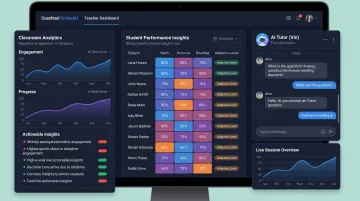
What sets Coschool apart is its use of Generative AI to simulate a 1:1 teacher-student ratio at scale. Unlike platforms retrofitted with AI features, Coschool was built AI-first — real-time adaptive learning closes knowledge gaps before they compound, with conversational learning at the core through Vin (AI Tutor), AI Assistant, and parent engagement modules.
The platform operates within curriculum boundaries, acting as a learning and teacher empowerment layer that works alongside a school's existing curriculum rather than replacing it entirely.
Schools using Coschool's SchoolAI platform have achieved 8-12% increases in class averages, with some breaking through the typical 70-85% performance ceiling to reach 90-92% consistently.
| Feature Area | Coschool |
|---|---|
| Key Features | Generative AI-powered 1:1 personalized learning; AI Tutor (Vin); real-time adaptive assessments; customizable teacher classroom tools (lesson plans, question banks, engagement tips); parent engagement module; actionable learning insights; closed-loop feedback system |
| Best For | Private schools seeking a future-ready, AI-native platform that empowers teachers and ensures no student is left behind—without locking the school into a rigid programme |
| Pricing Model | Purpose-built for private schools in India with annual fees typically above ₹20,000 per year; contact-for-quote model tailored to school size and needs |
Extramarks for Schools
Extramarks is a well-established Indian EdTech company offering an integrated digital learning solution for K-12 schools. It covers curriculum-aligned content, assessments, parent apps, and school management features, with significant presence across CBSE, ICSE, and state board schools.
Extramarks reports serving 15,000+ schools, 320,000+ teachers, and 10 million+ students. Its large content library includes 90,000+ animations/videos, 350,000+ recorded lectures, and a question bank of 1.7 million+ questions. The platform launched Smart Class Plus in 2023, an NEP-aligned digital classroom solution with interactive learning and assessment features.
While Extramarks offers familiarity and content breadth, its learning personalization is relatively static compared to newer AI-native platforms. Pricing can be substantial for smaller private schools, and the platform uses an inquiry-based model without public per-student pricing.
| Feature Area | Extramarks |
|---|---|
| Key Features | Curriculum-aligned digital content (CBSE Classes 1-12, ICSE Classes 6-12); school ERP integration; student and parent apps; assessment tools; live and recorded classes; large content repository |
| Best For | Schools transitioning from no-tech to structured digital learning, especially CBSE/ICSE schools looking for a familiar, content-rich platform |
| Pricing Model | School-facing offerings use inquiry-based "Get Started/Enquire" flows; no public per-student pricing disclosed |
Classklap
Classklap is a direct competitor to LEAD School in the integrated school programme space, offering curriculum kits, teacher guides, student workbooks, and a digital learning layer targeted specifically at English-medium private schools in Tier 2 and Tier 3 cities.
Acquired by Eupheus Learning for $19 million in 2021, Classklap's IMAX program focuses on K-10 school-based personalized curriculum. Post-acquisition, the combined entity reached approximately 18,000 schools, though current independent Classklap school counts are not publicly broken out.
Classklap's pricing is more accessible than LEAD's, and its structured programme — combining physical materials with digital touchpoints — suits schools that want tangible classroom resources. That said, it offers less sophisticated AI personalization and a less developed parent engagement layer compared to AI-first platforms.
| Feature Area | Classklap |
|---|---|
| Key Features | Integrated curriculum kits (physical + digital); teacher training and support; student workbooks; digital assessments; English-medium content for K-10 |
| Best For | Budget private schools looking for a structured, affordable LEAD-like alternative with tangible classroom materials |
| Pricing Model | No authoritative public per-student or per-school pricing disclosed; inquire directly for custom quotes |
Teachmint
Teachmint has evolved from a pure learning management system into a "connected classroom" platform. It now offers Teachmint X, a Google EDLA-certified device bundled with software including LMS, live and recorded class delivery, fee and attendance management, and EduAI features (quiz creation, homework generation, math solver, speech-to-text).
In FY24, Teachmint reported operating revenue of ₹17.1 crore (up from ₹8.1 crore in FY23), with total funding raised of approximately $118 million. The company has narrowed its net loss while scaling revenue.
Teachmint's strength is operational efficiency for administrators and teachers managing hybrid or digital classrooms. It is not a curriculum or content provider, though — schools seeking a true LEAD replacement will need to pair it with a separate learning platform.
Hardware also adds significantly to total cost. Digital board pricing runs ₹1.0-1.3 lakh (55-65 inch), ₹1.4-1.8 lakh (65-75 inch), and ₹1.9-2.4 lakh (75-86 inch), making device investment a major consideration.
| Feature Area | Teachmint |
|---|---|
| Key Features | School LMS; live and recorded class delivery; fee and attendance management; teacher app; parent communication tools; EduAI (quiz creation, homework generation, speech-to-text) |
| Best For | Schools primarily needing a digital school management and teaching delivery system, not a full curriculum replacement |
| Pricing Model | Freemium and subscription tiers for schools; hardware (digital boards) priced separately at ₹1.0-2.4 lakh depending on size |

Eupheus Learning
Eupheus Learning is an educational content and integrated school programme provider that partners with international publishers to offer curriculum resources, teacher training, and co-branded academic programmes for private schools in India, positioning itself in the premium segment.
The company has partnered with World Book for co-branded solutions and distribution rights, and tied up with Allied Publishers to relaunch 350+ school book titles. Post-ClassKlap acquisition, the combined reach spans approximately 18,000 schools, though current figures for Eupheus alone vary by source.
Eupheus is a strong fit for schools that prioritize international content quality and structured teacher development over AI-driven personalization. It offers no adaptive assessment or real-time learning intelligence, and its premium pricing puts it out of reach for most budget private schools.
| Feature Area | Eupheus Learning |
|---|---|
| Key Features | International publisher content partnerships (World Book, Allied Publishers); curriculum integration; teacher professional development; co-branded school programmes; academic planning support |
| Best For | Premium and semi-premium private schools seeking international curriculum alignment and high-quality content over AI-driven personalization |
| Pricing Model | School-focused distribution and solutions platform; pricing not publicly disclosed; operates on custom quote basis |
How We Chose These LEAD School Alternatives
Platforms were assessed on five core criteria relevant to private schools:
1. Depth of Curriculum and Content Coverage
Does the platform align with CBSE, ICSE, or state boards? Does it cover the grades your school serves? Content breadth matters, but so does board-specific relevance.
2. AI and Adaptive Learning Capability
Can the platform adapt to individual student learning gaps in real time, or does it simply deliver static content? Platforms with proven adaptive learning—like those validated in India's Mindspark study—demonstrate measurably stronger outcomes for weaker students.
3. Teacher Usability and Empowerment Tools
Does the platform reduce teacher workload or add to it? Effective platforms provide quick actionables—customizable lesson plans, question banks, engagement tips—that free teachers to focus on high-value classroom interactions rather than administrative tasks.
4. Parent Engagement Features
Are parents kept in the dark until the next parent-teacher meeting, or do they have real-time visibility into their child's learning journey? Platforms that connect home and school through transparent progress updates help teachers identify at-risk students faster and reduce gaps between school performance and parental awareness.
5. Pricing Accessibility for Small to Mid-Sized Private Schools
Transparent pricing prevents the cost escalation trap. Schools frequently make the mistake of choosing platforms based on brand visibility alone, rather than fit-to-purpose and long-term affordability.
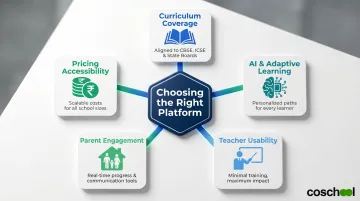
Taken together, these criteria point toward platforms that earn their place in the classroom. Strong teacher tools reduce burnout and improve delivery consistency. Real-time adaptive learning closes knowledge gaps before exams rather than after. And transparent pricing prevents lock-in scenarios where switching costs become prohibitive.
This list is not exhaustive. Schools should pilot any platform before full commitment, evaluating against three practical measures:
- How well it integrates with existing classroom workflows
- How quickly teachers adopt it without additional training burden
- Whether student engagement metrics improve within the first term
Conclusion
Choosing a LEAD School alternative isn't simply about cutting costs—it's about finding a platform that genuinely elevates learning outcomes, equips teachers to do their best work, and keeps parents meaningfully connected to their child's progress.
Evaluate platforms not just on features at the point of sale, but on scalability as enrollments grow, responsiveness of the vendor's support team, and whether the platform's learning philosophy aligns with your school's vision for education.
For private schools ready to move beyond rigid school programmes and embrace an AI-first learning environment, Coschool is built on three decades of education experience and designed from the ground up around AI-first learning. The platform delivers:
- Customizable classroom resources that help teachers provide targeted, personalized support
- Real-time adaptive AI that closes knowledge gaps for every student
- Actionable insights for school leaders across every grade, subject, and classroom
Explore Coschool at coschool.ai or reach the team at info@coschool.ai.
Frequently Asked Questions
What is LEAD School and why are private schools looking for alternatives?
LEAD School is an integrated school programme provider for private K-12 schools in India, offering curriculum, teacher training, and assessments. Schools increasingly seek alternatives due to cost concerns, limited curriculum flexibility, and the desire for more personalized, AI-driven learning tools that adapt to individual student needs in real time.
What should private schools look for in a LEAD School alternative?
Key criteria include curriculum alignment with your school's board (CBSE, ICSE, state), quality of teacher support tools, AI or adaptive learning capability, parent engagement features, transparent pricing, and ease of implementation.
How is an AI-first EdTech platform different from a traditional integrated school programme?
Traditional ISPs offer standardized content and training, while AI-first platforms like Coschool adapt in real time to each student's learning pace and gaps. This enables a personalized 1:1 experience at scale that static content libraries cannot replicate, closing knowledge gaps before they compound.
Is switching from LEAD School to a new EdTech platform disruptive for teachers and students?
Disruption depends on the platform chosen. Well-designed platforms offer structured teacher training, intuitive interfaces, and phased rollouts to keep classrooms running smoothly. Piloting first and tracking adoption within the initial term helps schools evaluate fit before full rollout.
What is the typical cost structure for LEAD School alternatives?
Most school-facing providers in India use custom quote models rather than public pricing. Costs vary based on bundle scope (curriculum, LMS, teacher training, assessments), number of students, and board coverage.
Can EdTech platforms genuinely improve learning outcomes in private schools?
Rigorous experimental evidence from India shows adaptive learning platforms delivered gains of 0.37 SD in math and 0.23 SD in Hindi over 4.5 months, with stronger results for weaker students. Schools using Coschool's SchoolAI platform have seen 8–12% increases in class averages when AI-driven learning is implemented systematically.