
Introduction
Walk into almost any classroom, and you'll witness a familiar frustration: despite carefully crafted lesson plans, some students stare blankly at the board, avoid participation, or deliver the bare minimum. Teachers face this challenge daily — not because their students lack ability, but because motivation remains one of the most misunderstood forces in education. Student motivation isn't a mystery. It's something teachers can actively shape through evidence-based strategies and intentional classroom design.
Research confirms that motivated students engage more actively, persist longer on challenging tasks, and achieve better outcomes. This post covers the science behind motivation, practical strategies backed by research and teacher experience, and how the right classroom culture sustains engagement over time.
TLDR:
- Deeper engagement and persistence on hard tasks both trace back to student motivation
- Curiosity-driven (intrinsic) motivation produces more durable learning than rewards alone
- Key strategies: relevant content, student choice, effort recognition, varied teaching, and shared goal-setting
- Strong teacher-student relationships and psychological safety create a foundation for sustained engagement
- Personalized learning technology helps meet students at their level, preventing boredom and disengagement
Why Student Motivation Is the Foundation of Effective Learning
Motivation isn't simply a "nice to have" element of classroom management—it's the engine that drives how deeply students process and retain information. A comprehensive meta-analysis of 344 studies involving over 223,000 students found that intrinsic motivation and identified regulation were positively related to academic achievement, while amotivation showed strong negative associations. Students who are genuinely motivated engage more actively, persist longer when tasks become challenging, and ultimately achieve better outcomes.
Research on teacher-student relationships shows that positive relationships carry medium-to-large associations with student engagement across preschool through high school. That finding reframes how teachers should interpret disengagement. Motivation struggles rarely reflect a student's character — they usually signal a mismatch between how content is delivered and what students find meaningful.
The real goal is genuine engagement — where students see learning as worth their effort, not just something to get through. Teachers who actively build conditions for that kind of motivation tend to see the difference beyond test scores: students who ask follow-up questions, return to hard problems voluntarily, and carry those habits outside the classroom.
Motivated students share three consistent traits:
- They engage more deeply with content rather than surface-skimming
- They persist through difficulty instead of disengaging
- They transfer learning to new contexts more readily
Intrinsic vs. Extrinsic Motivation: What Every Teacher Should Know
Understanding Intrinsic Motivation
Intrinsic motivation is learning driven by genuine curiosity, interest, or personal satisfaction—not external rewards. When a student researches a topic beyond the assigned material simply because they find it fascinating, that's intrinsic motivation at work. This type of motivation leads to deeper, more durable learning because the student's engagement comes from within.
Consider a middle schooler who becomes captivated by volcanoes during a geology unit and starts watching documentaries, building models, and asking questions that go far beyond the curriculum. Research consistently shows that students like this retain information longer and develop deeper conceptual understanding than those motivated by grades alone.
The Role of Extrinsic Motivation
Extrinsic motivation—grades, praise, points, competition—gets a bad reputation, but it plays a legitimate role in education, especially for building initial habits or engagement with unfamiliar content. The danger lies in over-reliance. Research shows that expected, tangible, task-contingent rewards can undermine intrinsic motivation under certain conditions. When rewards are removed, engagement often collapses.
For instance, a study with fifth graders found that ability-focused praise led to performance goals, lower persistence after failure, and worse subsequent performance compared to effort or process praise. This demonstrates how even well-intentioned extrinsic motivators can backfire if not carefully deployed.
Building Bridges from Extrinsic to Intrinsic
Skilled teachers use extrinsic motivators strategically to create a bridge toward intrinsic motivation. For example, introducing a new topic through a leaderboard game can spark initial engagement, then gradually shift focus to mastery and curiosity as students develop genuine interest.
Self-Determination Theory (SDT) research explains that students internalize the value of tasks—even uninteresting ones—when teachers provide meaningful rationales, offer choice, acknowledge student perspectives, and give informational feedback.
SDT identifies three basic psychological needs that, when met, drive intrinsic motivation:
- Autonomy — students have some control over how or what they learn
- Competence — students feel genuinely capable of succeeding
- Relatedness — students feel connected to their teacher and peers
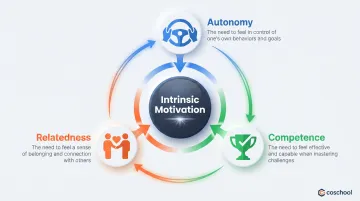
Designing lessons around these three needs doesn't require overhauling your curriculum. Small shifts—letting students choose their essay topic, offering tiered tasks, or building in peer collaboration—can meaningfully increase engagement over time.
Effective Strategies to Motivate Students in the Classroom
The following strategies are drawn from both motivation research and what practicing teachers authentically do in real classrooms. A study of 42 teachers found that eight of nine teacher-reported strategy themes mapped closely to research-based motivation design principles, confirming that effective practice aligns with what the science tells us works.
Make Learning Relevant to Students' Real Lives
Students disengage when they cannot answer the question, "Why does this matter to me?" Connecting curriculum to real-world contexts students care about makes abstract concepts concrete and meaningful.
Practical examples:
- Use real-life scenarios in math—planning a class trip, comparing phone plans, or managing a mock budget—to teach percentages, ratios, and financial literacy
- Link science lessons to local challenges like water quality in nearby rivers or energy use in the school building
- Draw parallels in history class between past events and current social movements or global conflicts students already follow
Helping students see how today's learning connects to future opportunities—careers they're curious about, skills they'll need, personal goals they're working toward—creates sustained investment that outlasts the next test.
Give Students Choice and Ownership Over Their Learning
Meta-analysis of 41 studies found that providing choice enhances intrinsic motivation, effort, task performance, and perceived competence, with stronger effects for children than adults.
Autonomy-supportive teaching means allowing students to choose project topics, select how they demonstrate understanding (essay, video, presentation, poster), or pick their own reading selections from a curated list.
Even small choices increase engagement noticeably. The key is providing structure—a framework of options rather than open-ended freedom, which can overwhelm students. A "choice menu" format works well:
Example choice menu for a history project:
- Research and present on one of three historical figures
- Demonstrate understanding through written essay, video documentary, or oral presentation
- Work independently, with a partner, or in a small group
This structure provides enough autonomy to feel empowering while maintaining clear learning objectives and expectations.
Acknowledge Effort and Celebrate Progress, Not Just Results
Research on growth mindset demonstrates that when teachers explicitly recognize effort, improvement, and risk-taking—rather than only grades or correct answers—students build resilience and become more willing to engage with difficult material.
Process praise fosters persistence after setbacks. When a shy student raises their hand for the first time, acknowledge that courage. When a struggling student improves from 60% to 70%, celebrate the growth—not the gap that remains. Students who hear their effort recognized keep showing up when the work gets hard.
Use Varied and Interactive Teaching Methods to Sustain Interest
Novelty and variety in delivery prevent habituation and re-engage students who have tuned out routine formats. Mix direct instruction with group work, hands-on demonstrations, technology integration, Socratic discussions, and collaborative activities. Research suggests planning around shorter attention cycles (roughly 15-20 minutes for middle and high school students) and building in transition activities helps maintain focus.
Effective variety strategies:
- Start with a 5-minute hook or warm-up activity
- Follow with 15 minutes of direct instruction
- Transition to 10 minutes of partner or small-group practice
- Close with a brief whole-class debrief or exit ticket
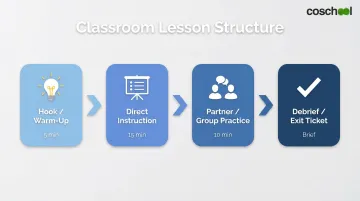
This rhythm keeps students engaged by changing the format before attention wanes.
Set Collaborative and Achievable Goals with Students
Co-creating goals with students—both individual and class-wide—makes them more invested in achieving those goals. The APA's Top 20 principles for K-12 teaching highlight that short-term, specific goals improve motivation and performance in school learning contexts.
When students help define what success looks like, they develop ownership. Use self-tracking tools like portfolios, progress charts, or digital dashboards to make growth visible.
For example, a student might set a goal to complete all homework assignments for two weeks, track progress daily, and reflect on what got in the way. Watching their own progress accumulate is itself motivating.
Building a Classroom Culture That Sustains Motivation
Individual strategies work best within a foundation of positive teacher-student relationships and a supportive classroom culture. Research spanning preschool through high school shows that stronger positive teacher-student relationships correlate more strongly with student engagement than with achievement. Students in classrooms with high-quality teacher relationships showed greater engagement and lower conflict.
Create a Psychologically Safe Classroom
Students need to feel safe asking questions, making mistakes, and taking intellectual risks without fear of embarrassment. Psychological safety is the foundation of engaged learning.
Concrete practices:
- Celebrate when students take academic risks, even if they get the answer wrong
- Normalize "I don't know yet" as a phrase that signals growth, not failure
- Model how you handle confusion or errors as a teacher—show students that struggle is part of learning
- Avoid sarcasm or dismissive responses to student questions
- Establish clear norms that mistakes are opportunities, not failures
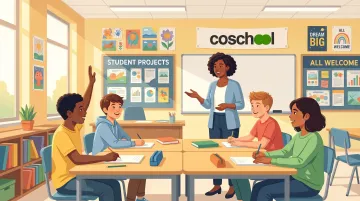
Participation deepens when students trust that getting it wrong is part of getting it right.
Foster Peer Connection and Belonging
A meta-analysis of 82 studies in secondary education found that school belonging correlated positively with motivation (r ≈ .31) and achievement (r ≈ .18), and negatively with absence and dropout (r ≈ -.16). Peer connection reduces the isolation that demotivated students often feel.
Practical belonging strategies:
- Use reading buddies or peer study partners
- Structure peer feedback sessions where students give constructive input on each other's work
- Arrange group seating that rotates periodically so students work with different classmates
- Design collaborative projects where groups have shared stakes in outcomes, encouraging mutual support
Students with peers invested in their success are far less likely to disengage — belonging makes effort feel worthwhile.
Be a Motivational Model
Students observe whether their teacher's enthusiasm, effort, and attitude match spoken expectations. Teacher energy is contagious. Modeling specific behaviors sends the clearest signal that learning is worth the effort:
- Curiosity: Say "I don't know — let's research it together" and mean it
- Resilience: Talk through your own problem-solving process when you're stuck
- Honesty: Admit when a topic is genuinely challenging, rather than oversimplifying it
Conversely, students mirror disengagement quickly. If they sense you're going through the motions, they will too. Authenticity isn't optional — students notice it immediately.
Using Technology and Personalized Learning to Amplify Motivation
One of the most persistent challenges to student motivation is one-size-fits-all instruction. When content is too easy, students are bored; when it's too hard, they disengage. Research on differentiated instruction shows that middle school students in differentiated classrooms showed significantly higher achievement and reported higher engagement compared to traditional instruction peers.
Personalized, adaptive learning addresses this by meeting each student at their current level and adjusting in real time. Coschool is an AI-first platform designed to bring personalized 1:1 learning to every student. Using AI tools like Vin (AI Tutor) and an AI Assistant, Coschool provides real-time, conversational, adaptive support that helps students learn without knowledge gaps. Schools using the platform have achieved an 8–12% increase in class averages, demonstrating what's possible when students receive timely personalized support.
Rather than drill-and-practice repetition, Vin uses a guided, Socratic approach that builds genuine understanding and critical thinking. This conversational model keeps students engaged because the learning feels interactive and responsive to their individual needs. Teachers receive specific insights about each student's progress, strengths, and gaps — so they can step in early where students need extra support.
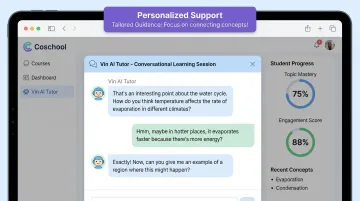
That support extends to teachers too. Coschool automates lesson planning, homework workflows, and progress tracking, freeing up time for the classroom interactions and relationship-building that drive motivation most.
These tools work together to give every stakeholder a clearer picture of learning:
- Students get adaptive, conversational support that meets them where they are
- Teachers gain time and insight to focus on meaningful instruction
- Parents receive real-time progress updates through Coschool's parent engagement portal
When parents can see what their child is working on and how they're progressing, encouragement doesn't stop at the school gate. Coschool's parent portal keeps families informed and connected — turning parents from passive observers into active participants in their child's learning.
Frequently Asked Questions
What can a teacher do to motivate students?
Build genuine relationships, make learning relevant to students' lives, offer meaningful choices, acknowledge effort and improvement rather than just results, and maintain an enthusiastic and consistent presence.
What strategies would you use to encourage student participation?
Create a safe space for responses through think-pair-share structures or no-wrong-answer discussions, offer participation options beyond hand-raising (written responses, digital polls, small-group sharing), and use collaborative structures that lower the stakes of speaking up, such as group presentations or peer teaching.
What are the 5 C's of motivation?
The 5 C's refer to Confidence, Competence, Choice, Care or Connection, and Challenge. Together, they form a framework for building classrooms where students feel capable, supported, and genuinely engaged in learning.
What are the 4 R's of motivation?
The 4 R's framework includes Relevance, Relationship, Rigor or Resilience, and Results or Recognition. Teachers can use it as a quick check for whether their classroom environment addresses motivation from multiple angles.
What is the 3-2-1 method for motivation?
The 3-2-1 method is a reflection technique where students identify 3 things they learned, 2 things they found interesting, and 1 question they still have. It signals to teachers what sparked curiosity and what still needs clarification.
What are the intervention strategies for students?
Effective early intervention strategies include:
- Conducting one-on-one check-ins to identify root causes of disengagement
- Breaking tasks into smaller, achievable steps
- Adjusting content difficulty to match student readiness
- Connecting students with peer support or study partners
- Involving parents to create consistent support across home and school